Why Redundancy Matters So Much
In my experience, redundancy is one of the hardest things you deal with in HR, arguably second only to fatalities in the workplace.
The way I describe it is this: you are dismissing people for something that isn’t their fault.
They haven’t done anything wrong. And yet, they’re losing their job.
The emotional impact of that is huge. It’s one of the most stressful experiences people can go through, and how it’s handled can genuinely change lives.
That’s why getting it right matters so much.
The Moment It Became Real for Me
Early in my career at British Steel, I remember my first difficult redundancy conversation.
Up until then, I’d been dealing with people who wanted voluntary redundancy which, in truth, felt relatively straightforward. But then I sat down with a man who was facing losing his job and had no idea how he would support his family.
He broke down. He was on his knees, begging for a way out.
That moment stayed with me.
It was the point where I realised this isn’t about process or policy. This is about real people, real lives, and real consequences.
Two Experiences of Redundancy – And One Key Difference
I’ve also been on the receiving end of redundancy twice myself, and the difference in how it was handled couldn’t have been more stark.
The first time, my manager went beyond what he had to do. He sat down with me, talked about my future and encouraged me. That conversation gave me the confidence to change direction. I worked nights to pay the mortgage while studying during the day and it completely changed my career path.
The second time was the opposite. The process was impersonal, rushed and handled poorly. It was significantly more stressful, despite the situation itself being similar.
The difference? Leadership.
How leaders show up in these moments makes all the difference
It All Comes Down to Leadership.
One of the biggest lessons I’ve learned is that redundancy is owned by leaders – not HR.
HR plays a critical role in guiding, supporting and ensuring the process is fair and lawful. But it’s leaders who set the tone.
When leaders are present, human and willing to go beyond the script, people feel supported.
When they hide behind process, delegate difficult conversations or appear disengaged, people feel abandoned.
And people remember that.
Working with Trade Unions: Take the Brave Approach
In unionised environments, I’ve seen two approaches to consultation.
The first is treating it as a tick-box exercise. The decisions are already made, and consultation is just something you have to get through.
The second, and the one I strongly advocate, is genuine consultation.
That means involving unions early, being open about the challenges and actually listening to what’s being said.
Yes, it requires trust. Yes, it can feel uncomfortable. But the outcomes can be dramatically different.
Even when the final decision doesn’t change, people feel heard. And that reduces stress, frustration and conflict significantly.
The Power of Genuine Consultation
One of the biggest misconceptions I see is that consultation is just a formality.
In reality, when it’s done properly, it can lead to outcomes you wouldn’t have considered.
I’ve been involved in a situation where we were facing up to 2,000 redundancies. Through genuine consultation, collaboration with unions and a real commitment to finding alternatives, we reduced that to zero compulsory redundancies.
That included creative solutions like:
- Adult apprenticeships to retain skills
- Flexible contractual arrangements for experienced workers
- Alternative cost-saving measures beyond headcount reduction
None of those ideas were on the table at the start. They came from listening.
That’s what real consultation can do.
If you've never seen our top 10 tips for better redundancy consultations you can see them here.
Preparing Leaders for What’s Ahead
One of the most important roles HR can play is preparing leaders properly.
That means helping them understand:
- The human impact of redundancy
- The purpose of consultation (not just the process)
- How to respond to alternative ideas and challenges
- What “good” looks like in these conversations
A simple but powerful question I often use is:
“If this was your partner, your child or someone close to you, how would you want their employer to handle this?”
The answer to that question usually points you in the right direction.
Managing Your Own Boundaries
For HR professionals and leaders, redundancy can be emotionally draining.
You care about people. You want to help. But there’s a balance to strike.
You need to be present, empathetic and supportive – but also maintain clear boundaries.
You can’t take responsibility for everything. You can’t be available 24/7. And you can’t step so far in that you lose your ability to do your job effectively.
It’s about leaning in, without losing yourself in the process.
Give It the Time It Deserves
One of the biggest risks in redundancy programmes is trying to squeeze them into an already full workload.
This is not something you can do properly in the margins.
If organisations want redundancy to be handled well, they need to:
- Free up time
- Prioritise the process
- Bring in additional support if needed
Anything less risks turning it into a rushed, impersonal experience – and that’s when things go wrong.
A Final Thought: It’s Always About People
Redundancy may start as a business decision, but it’s experienced as a human one.
How you handle it will stay with people long after the process is over.
If you approach it with honesty, empathy and a genuine willingness to listen, you can make a difficult situation more manageable.
If you don’t, it can have lasting negative effects – not just for individuals, but for the organisation as a whole.
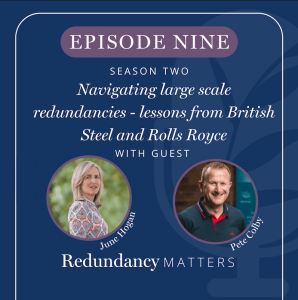
If you’d like to explore this topic further, I’d encourage you to listen to the full conversation on the Redundancy Matters podcast with June Hogan of Wildwood Coaching available here or wherever you listen to your podcasts.