


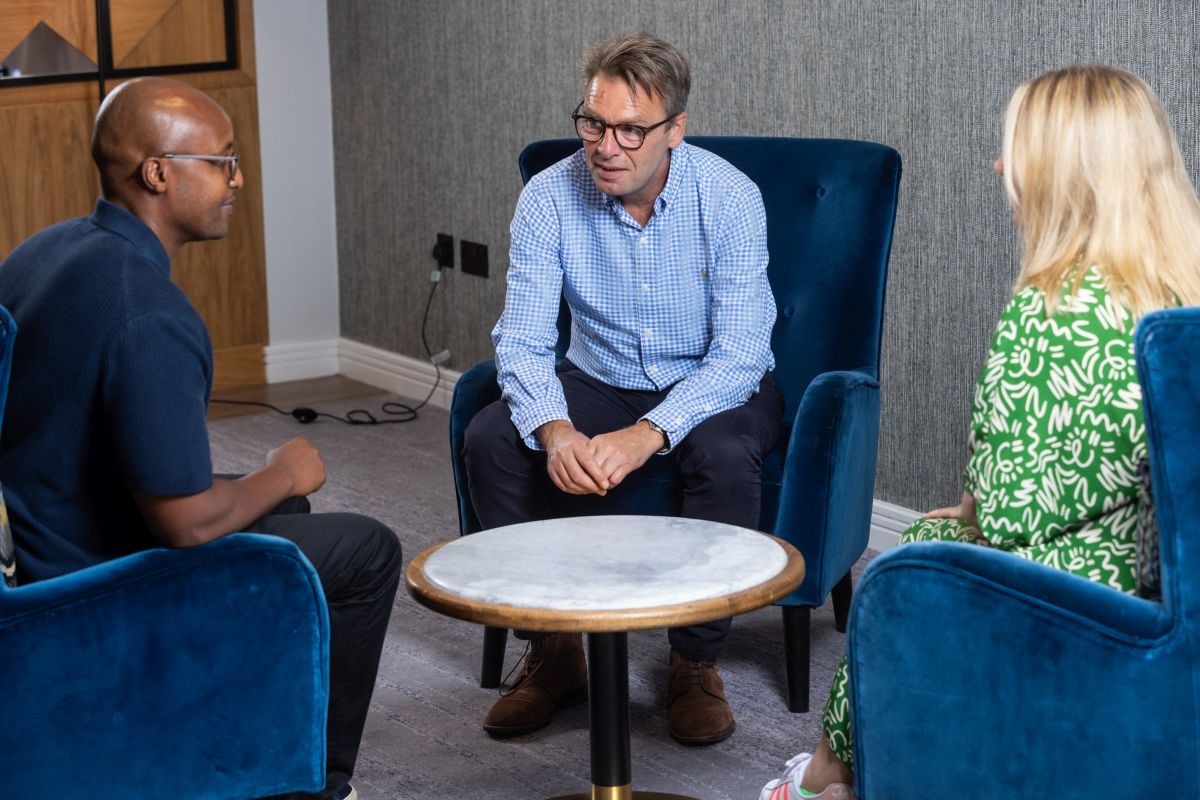
Sometimes employees and organisations need a little bit of help to work out solutions to issues in the workplace. Over 97% of the cases we mediate result in a resolution. If you have any urgent questions about our mediation services such as cost or availability etc please scroll down to commonly asked questions.
Our incredibly talented mediators help with very difficult cases around the UK. Whether it's allegations of discrimination, bullying, harassment, etc - or office spats, performance or absence issues, teams not working effectively or issues between management and trade unions - we can help with them all. There are very few (if any) workplace issues where mediation won't help!
The main reasons we do mediation are time, cost and stress - with stress being by far the biggest issue. As mediators we recognise the stress that everyone is under - not just the aggrieved employee, but the "accused", the managers and not forgetting the HR professionals who are also embroiled in the issues.
It really is a shame what people put each other through when they are in dispute, and we all know (deep down) that life really is too short. For context, most disputes we deal with have been rumbling for months or years and a mediation between two people will take just one day!
Our job is simple to explain - we help people to talk, listen and understand each other. They don't have to be friends, but they do need to be professional, respectful and courteous if they're going to maintain a working relationship. Sometimes, however, employment relationships are broken beyond repair, but there's still a solution through mediation - we explain more about this in our blog the difference between workplace and employment mediation.
If you have a workplace or employment case that you would like to discuss, please click here or the orange button below - we'll schedule some time to talk about the case and we'll also send you a video to watch which explains the mediation process.
If your query is about a family matter (eg children, divorce, etc) or a civil & commercial case (eg commercial contracts, neighbour disputes, etc) please scroll down to connect with specialist mediators in these areas who we know, trust and recommend.
FREQUENTLY ASKED QUESTIONS (Clients)
We charge £725 + VAT per party. Most mediations are between two people, which would be a total cost of £1,450 + VAT. The cost includes:-
1) Allocation of a fully qualified, accredited and experienced mediator
2) Client introduction / briefing call ahead of the mediation
3) Pre-mediation calls with each party (up to one hour each ahead of the mediation)
4) Sending questions & answers to parties
5) Implementing without prejudice agreements to mediate
6) A full day of mediation for two people (longer for three or more)
7) Mediation outcome agreements
8) Follow-up with client four weeks after the mediation
In terms of expenses, online / virtual mediations do not incur any, whereas in-person we have to cover costs for travel and accommodation, if applicable. We charge based on travelling from Nottingham or from where the mediator lives - whichever is the least.
We always keep costs and expenses to a minimum for our clients - that's important to us as part of our customer service ethos, so please be assured that if we need to stay overnight we don't stay in luxury hotels - Premier Inns or equivalent are fine for us!.
Yes. We have mediators based all over the UK, therefore we charge expenses from either Nottingham or where the mediator lives - whichever is the least.
Absolutely, yes. Before the world changed in 2020, we were already carrying out mediations virtually due to the many benefits of doing so - especially when things are extremely urgent and it's difficult for people to be in the same venue. Although some situations must be dealt with in-person (always the preferred choice if possible), sometimes customers choose a virtual mediation and we see no difference in the results.
We're happy to discuss what works best for you and to chat through the benefits of each approach, and you may want to watch this video about online mediation.
The majority of our mediations can be scheduled in the next 2-3 weeks, but sometimes we can arrange them sooner than this. The key to arranging mediations at very short notice is to provide us with as many dates as possible when the parties involved can be available. The more options you can provide, the sooner we should be able to arrange the mediation.
Yes, we conduct facilitated conversations too - usually for teams who are having a few challenges but aren't in dispute. It's important to understand the main differences between mediation and facilitated conversations, so please watch this video before deciding, and let us know if you have any questions.
The difference in terms of cost is that we charge per hour irrespective of the number of people involved. Our hourly rate is £180 + VAT.
No problem at all - we only need the following two documents completing - once you have submitted these we will allocate a mediator within 24 working hours, as long as you have provided dates on the referral form when the parties involved are available. Please ensure your employees have agreed to attend mediation, and are expecting to hear from us.
The two forms required are:-
1) Terms of Business
2) Referral Form
If you have any questions, drop us an email to info@pragmatism-uk.co.uk
Firstly, don't worry - this is quite normal. Most people have never been involved in mediation before, and they often assume things which aren't quite correct. Some of the common worries are that the mediation won't be impartial, somebody will act inappropriately or (most common of all) that a grievance will get them the outcome they want.
Once employees have it explained to them that mediation with a professional organisation is completely impartial, and that in the very unlikely event that they don't reach a resolution they can still progress with a grievance, they normally recognise that they have nothing to lose and that mediation gives the best possibility of achieving an acceptable outcome.
One of the first things you can do is to share this website page with the employee, as the questions in the section below should hopefully alleviate some of their concerns.
If your employee is still reluctant or unsure about mediation, we'd be more than happy to have a confidential chat with them to explore their reservations. We would not charge anything for that call, and we would not share any detail of the conversation with you - all we would ask your employee for their permission to share with you is the fact that we have had a call.
Please drop us an email to admin@pragmatism-uk.co.uk if you would like help in this area.
Not necessarily! We have mediators based all over the country, and we charge expenses from either Nottingham or where the mediator lives - whichever is the least. It's worth letting us know that you'd like a mediator who lives as near to you as possble, and we can let you know who is closest. This will probably just mean that we need a few possible dates from you so we can find a date which fits with the mediator who is more local to you.
FREQUENTLY ASKED QUESTIONS (Employees)
Generally, you will begin with separate and confidential meetings alone with the mediator, and then progress to joint discussions. Every mediation is different, and the mediator will utilise their judgement throughout. In our experience, the sooner joint discussions can take place the better, but the mediator will constantly review and make professional judgement as to when the best time will be in your specific situation.
More than one separate meeting may be required. The mediator will help to prepare you for a joint meeting with the other parties, as a key aim of mediation is to improve the working relationship going forward.
Workplace mediation is a process that focuses on the specific relationship you have with the other person (or people) involved therefore no third parties would normally accompany either person. This is an opportunity, through having an impartial mediator facilitating the process, for you to speak directly with the other person and they to you – the opportunity for sustained long-term improvements is significantly decreased if other parties are involved.
The meetings will take place in rooms that will be pre-arranged by the referrer. The mediator will ask for rooms that are as discreet and private as possible, in order to minimise the scope for distraction or interruption, and to allow all parties to speak openly. In situations where people are unable to meet at the same venue the mediation can be carried out online, where the same processes and principles apply.
Absolutely – yes. You will be asked to sign a mediation agreement beforehand which will explain about the importance of confidentiality. Our mediators are governed by strict processes in terms of confidentiality.
One of the main benefits of mediation is confidentiality. Other than the situations outlined in the mediation agreement (eg disclosure is required by law) there are no restrictions on what you tell the mediator during private sessions and you don’t need to worry about how you say it – it’s best to be yourself. This all helps towards gaining a mutual resolution to the issues.
The mediator will be fully trained, qualified and regulated by the Civil Mediation Council. They will also have significant experience of workplace situations.
Sometimes the temptation is to try to prove to the mediator that you’re right and others are wrong. The mediator is not there to judge and will not do so – they will focus on the relationship between the parties involved. The individual and joint sessions are usually around 60-90 minutes each and there is not time to explore documentation from the past.
The mediator will ask you to speak to him/her and not to read from extensive notes. We recommend that the most documentation you bring is a few bullet points on a piece of paper to remind you of the issues which are most important to you. The mediator will not tend to look at any documents in detail unless they are part of a proposed solution.
The mediator keeps a watchful eye on how each person is handling the process. Anybody can suggest a break at any time, including the mediator – sometimes you may need a few minutes to gather your thoughts or to talk with the mediator alone before resuming.
It’s in everyone’s interest to proceed with the process, if at all possible. The mediator may, however, decide there is no advantage to continuing that day and suggest a halt is called to the process pending further discussions.
Part of the mediator’s role is to manage the ongoing dialogue to ensure that each party respects the other and uses appropriate and constructive language to achieve a better understanding and hopefully an agreed way forward.
Sometimes a little tension in the discussion can help to generate some progress and the mediator will manage this accordingly. For this reason, the mediator will not always be able to make the discussion entirely comfortable, as it is important not to avoid the difficult issues. The mediator will make a professional judgment about when to intervene and ensure a sense of balance and cooperation in the process. You will never be forced to meet or do anything against your will.
The mediator is independent and impartial, and is there to make the process equal and fair to all parties. If behaviours are inappropriate, then the mediator will manage this and stop the meeting if necessary.
All we ask is that you come to the process ready to express your views as clearly and respectfully as you can, and also be prepared to look at yourself and how you might make positive changes to help move the issue forward towards a resolution. You should not come to accuse, blame or to use the process to score points against other people, but genuinely to try and find a way of resolving the issues.
Don’t enter into mediation just because someone else thinks it’s a good idea, but do stay open minded even if you can’t foresee a resolution - this is often the case. If you’re not motivated to engage and look for solutions, you may end up wasting time for yourself and others - if you are open to trying to get a mutual way forward then you most probably will with the mediator's help. People are often surprised at how they can work out solutions through mediation.
You should consider ahead of the day what you want to achieve from the process. The mediator will help you to focus on just three or four key things you want to communicate to the other person that will clarify your position at present and how you believe things can move forward.
Be realistic in preparing for the mediation and don’t be too fixed about your requirements. For example, some people approach mediation insisting on an apology from the other person. The reality is that sometimes there will not be an apology given but there may be a ‘shift’ in mutual understanding that can often mean more than the words of an apology.
Take time to consider the fact that no conflict situation is ever the result of just one person being at fault. We can all be stubborn and inflexible at times and thinking about how you might make changes as well as asking the other person to do the same will help to achieve a better outcome.
No. The mediation agreement that you and the mediator sign will stipulate that no recording of any kind will take place.
Yes, but only for use within the mediation – these must not be used after the session. Any notes taken during the meeting by the mediator will be destroyed following the mediation - you should do the same or hand them to the mediator for him or her to destroy.
The mediator will need to provide some feedback to the referrer and will use the last part of the joint session to focus all parties on achieving and documenting agreed outcomes. The mediator will ask what the parties are happy to have communicated back to the referrer, as they need to be updated on progress, plus any solutions they need to be aware of or help with.
The only good outcomes to a mediation process are those in which both or all parties agree. Nobody will be forced or cajoled into ‘signing up’ to a way forward that is not right for them or in their interests. Outcomes on paper that are not sustainable are not fit for purpose and should be challenged. However, you will be required to invest a lot of time and energy into working on improving the relationship - mediation is by no means a magic pill. Mediation is the starting point to repairing working relationships and is not the finishing line.
The mediation process is usually concluded within a single day for two parties. If you, the mediator or other parties believe that more time is needed to consider a way forward, it may be suggested that the process is adjourned and reconvened. Additional time would need to be approved by the referrer.
No. Attending mediation is not instead of any procedural processes that exist within your workplace such as grievance procedures. Neither does it mean that you cannot pursue other claims through Employment Tribunals, etc.
The intention of mediation is to resolve the issues that exist between parties in a mutually agreeable way so that nobody involved feels that they need to raise grievances, etc. As long as you and other parties involved are open to achieving a resolution there is a very high possibility that you will do so.
The mediator will discuss with the parties what they need going forward and will help parties to document this in the appropriate way. Any agreement reached is between you and the other parties, it is not an agreement with the mediator.
The mediator will agree with the parties the feedback to be given to the referrer and this will be provided following the mediation. It could be that there would be a value in a regular meeting to check progress with the referrer or another suitable person, or even that a training/coaching or additional support need has been identified. Whatever the specific outcomes, all parties should expect that the referrer will speak with them to review what happened in the process and what further support is needed.
Other Mediation Specialists
Whilst mediation is a generic skillset, there are distinctive specialities within the mediation profession. At Pragmatism we very much specialise in workplace and employment mediation. Below, we have provided links to specialist providers of family mediation and civil & commercial mediation. There are no commercial arrangements with these organisations - they are simply specialist mediators who we know, trust and recommend. Please click the relevant link below to find more details and to arrange to discuss your case.


Our Most Recent Blogs




WE'D LOVE TO HEAR FROM YOU!
If you'd like to know more about the services we offer, or you have a question, please don't hesitate to call or email us. Alternatively, complete the enquiry form opposite and we'll respond quickly.
Pragmatism (UK) Ltd
4 Cross Street
Beeston
Nottingham
NG9 2NX
Social Media